Mobile-first flow
The first mobile-first wireframes the company had produced, then worked back to desktop.


Case study, Sainsbury's Nectar
Nectar had millions of customers and plenty of traffic. None of that mattered when the registration flow kept losing people. I found where customers were getting stuck, added the hand-holding the journey needed, and the numbers moved.
What was broken
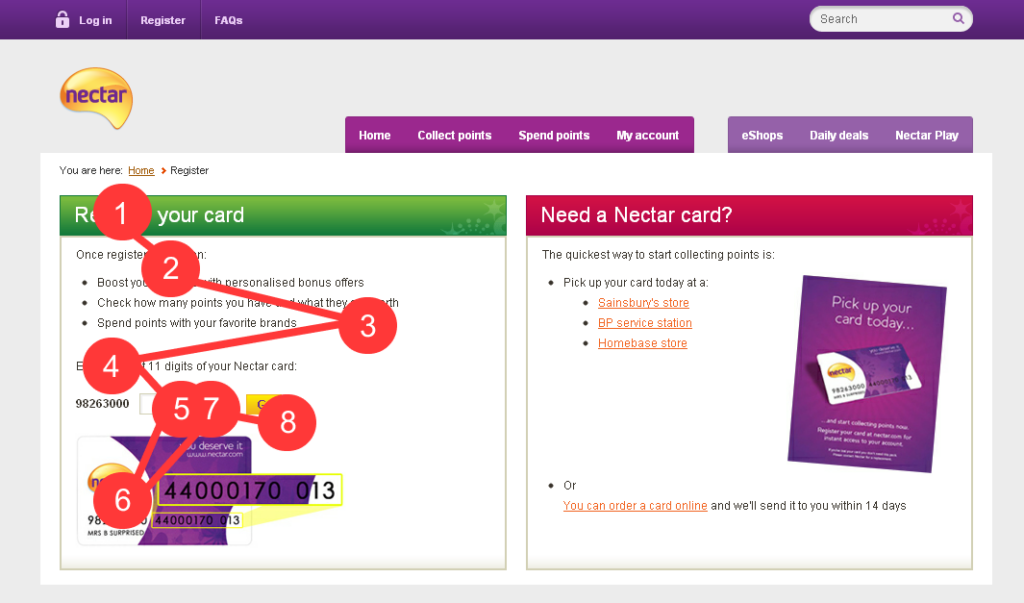
For every 100 people who started signing up, 53 walked away. Not because they didn't want a card. Because the registration flow fought them.
The worst offender was the CAPTCHA. People would get it wrong, try again, and not realise their password field had been wiped. They'd resubmit blank, fail again, and end up trapped in a loop with no idea why. The thing meant to stop bots was stopping customers instead.
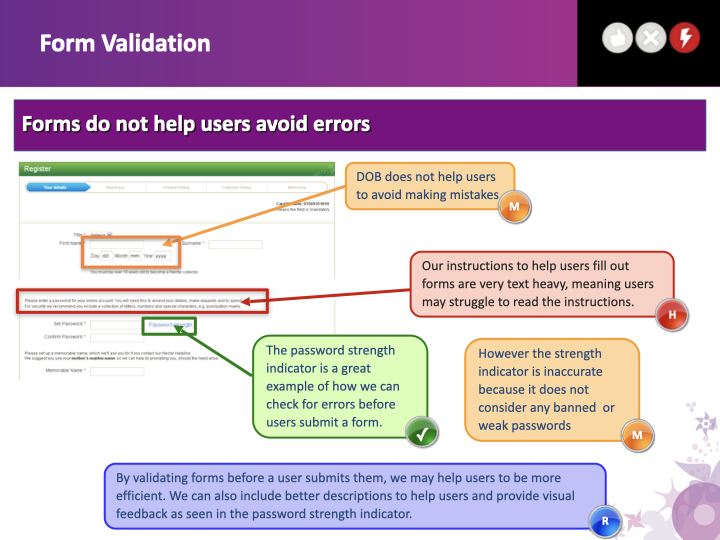
On top of that, mobile users were forced through a desktop flow, errors only showed after submission, and the journey did not give people enough help to recover when something went wrong. There was not enough hand-holding, not enough guidance, and not enough useful error messaging to get real customers through.
Why it mattered
A 47% completion rate on the main registration flow isn't a design problem. It's a revenue problem. Half the people who wanted in never got in.
It didn't stay quiet either. The Newcastle call centre was buried under registration complaints for things that should have worked online. Social media filled up with frustrated customers, in public, in front of millions. Every dropout was lost revenue and a small dent in trust.
What I changed
I stepped through the complete registration flow myself, sat with the Newcastle call centre team to hear the real complaints, and watched real customers get stuck in testing. That testing mattered because the flow had not been through that level of customer evidence before.
That's where the killer insight came from: the CAPTCHA was the trap. So I cut it and brought in a honeypot instead, an invisible check that catches bots without ever bothering a real person.
The first mobile-first wireframes the company had produced, then worked back to desktop.
People saw errors as they happened, not after they had already failed.
A clearer progress bar and smart defaults cut the effort needed to finish.
The CAPTCHA went. The honeypot did the job without blocking customers.
The result
Sign-up completion went from 47% to 87%. Around 45,000 more people completed registration every month. The work helped unlock roughly £1.4M in additional annual revenue, and registration complaints to the call centre dropped to zero.
What this proves
I don't start by redesigning everything. I start by finding the one place where money, trust or momentum is leaking, then I fix the system around it.
That's exactly what the 30-Day Build does for your setup. I find the point where people give up, then build the page, the offer, the proof, the error handling and the route to payment around it so they don't.
Free first step
Book a free 60-minute Money Map call and I'll show you where I'd look first.
Book a free Money Map call