How fixing one form recovered £1.4 million a year for Sainsbury's Nectar
A registration flow with 2.3 million monthly visits was quietly suppressing revenue. Nobody had walked the journey as a first-time user.
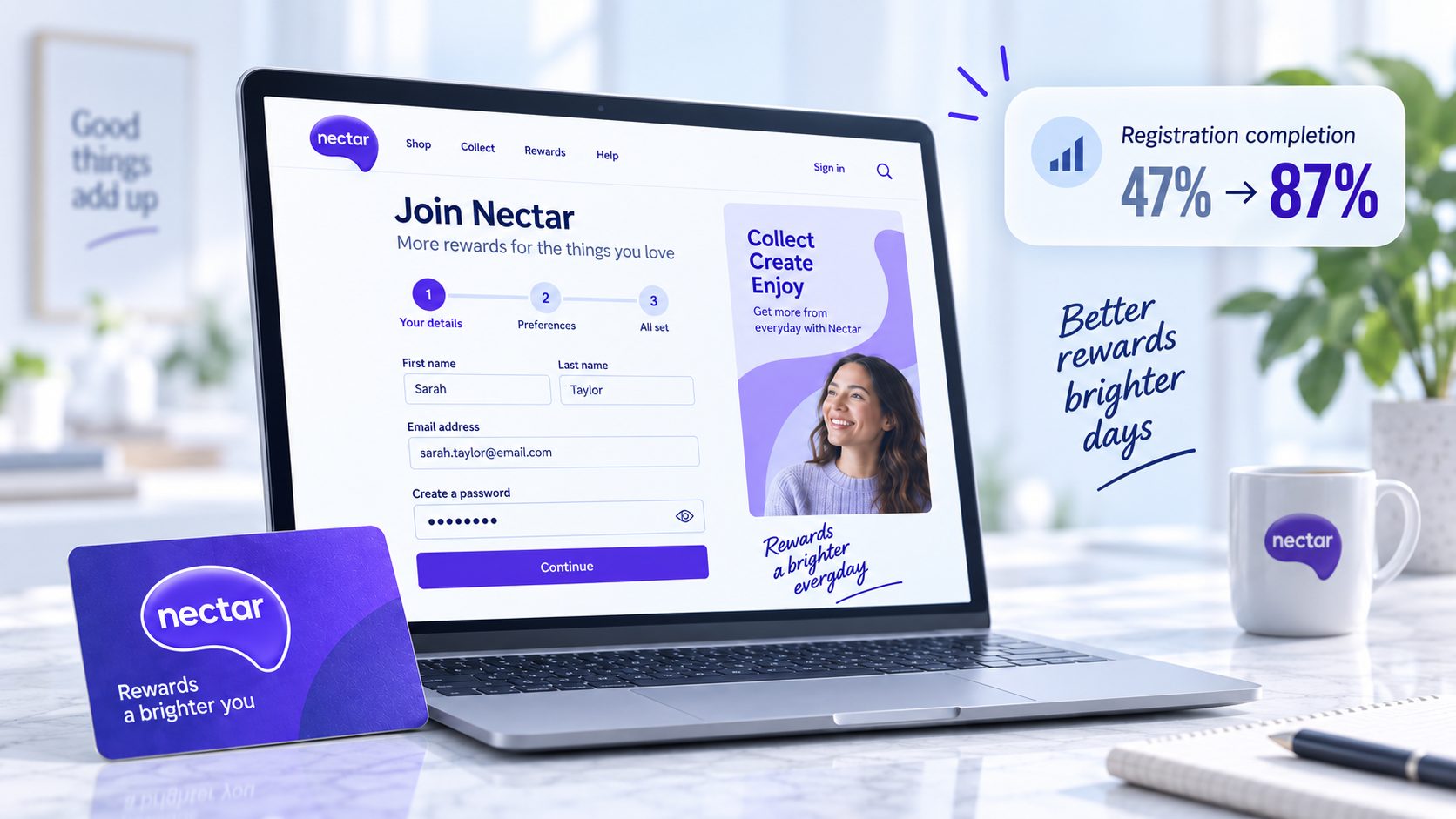
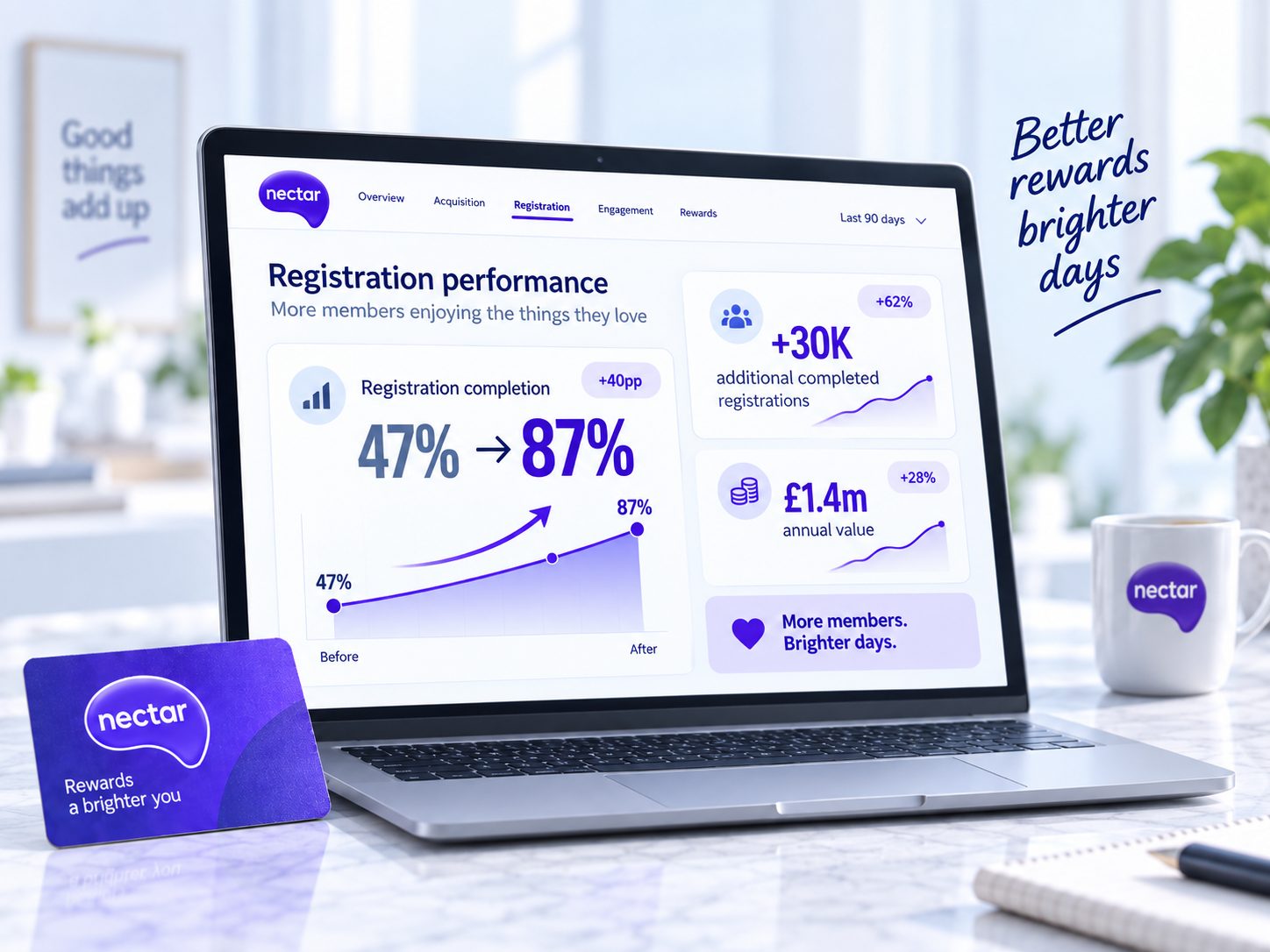
47%
Completion rate before
87%
Completion rate after
£1.4M
Annual revenue recovered
1
Root cause found
Everything looked fine from the inside
Sainsbury's Nectar is one of the UK's largest loyalty programmes, with over 18 million customers. In 2014, the digital team was working hard: new features being shipped, the platform actively maintained, traffic healthy at 2.3 million monthly visits.
Revenue was not moving.
New customer registrations were flat. Existing customers were struggling to recover lost cards and reset forgotten passwords. The call centre was fielding a steady stream of support requests that should never have existed. Social media complaints about the digital experience were a constant background noise.
The team was focused on building. Nobody had stopped to walk the journey as a first-time user and ask: where is this actually breaking?
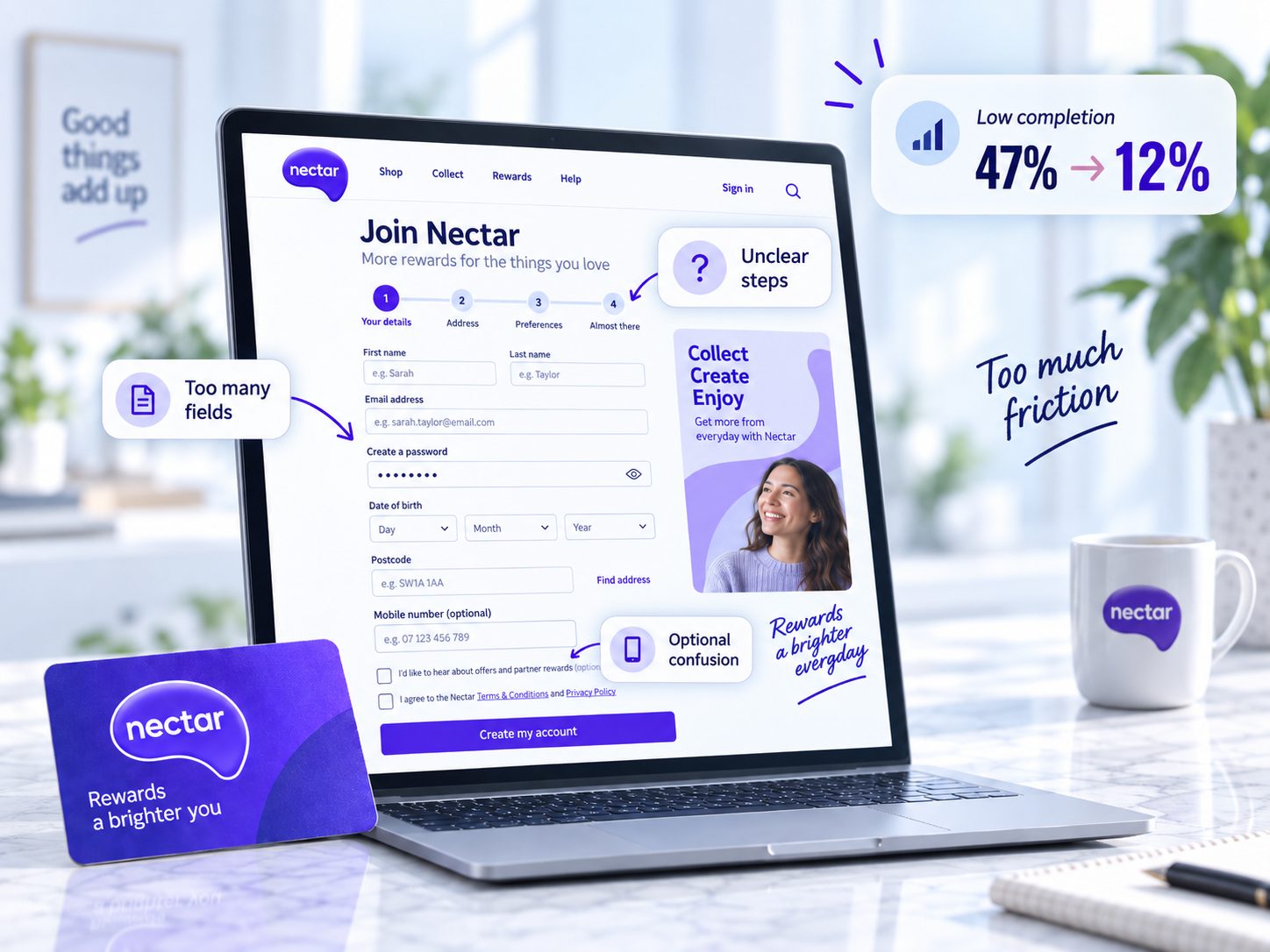
The original registration flow. Three critical journeys were broken: new customer registration, lost card replacement, and forgotten password reset.
Walking the journey as a customer reveals what data cannot
The diagnostic approach was straightforward: walk the three critical journeys end to end, exactly as a first-time customer would experience them, and record everything that created hesitation, confusion, or friction.
The registration flow was the primary constraint. It was asking for too much information, too early, before a new customer had been given any reason to trust the process or understood what they were getting in return.
The registration form was asking for personal information at the wrong point in the journey. Customers were being asked to commit before they had been shown what they were committing to. The value exchange was back-to-front.
Supporting issues compounded the problem: the lost card and forgotten password flows had similar structural problems, and the error states gave no useful guidance when things went wrong.
Annotated findings from the diagnostic walkthrough. Each friction point mapped to a specific moment in the journey where users stopped or reversed.
Restructure the journey around how customers actually behave
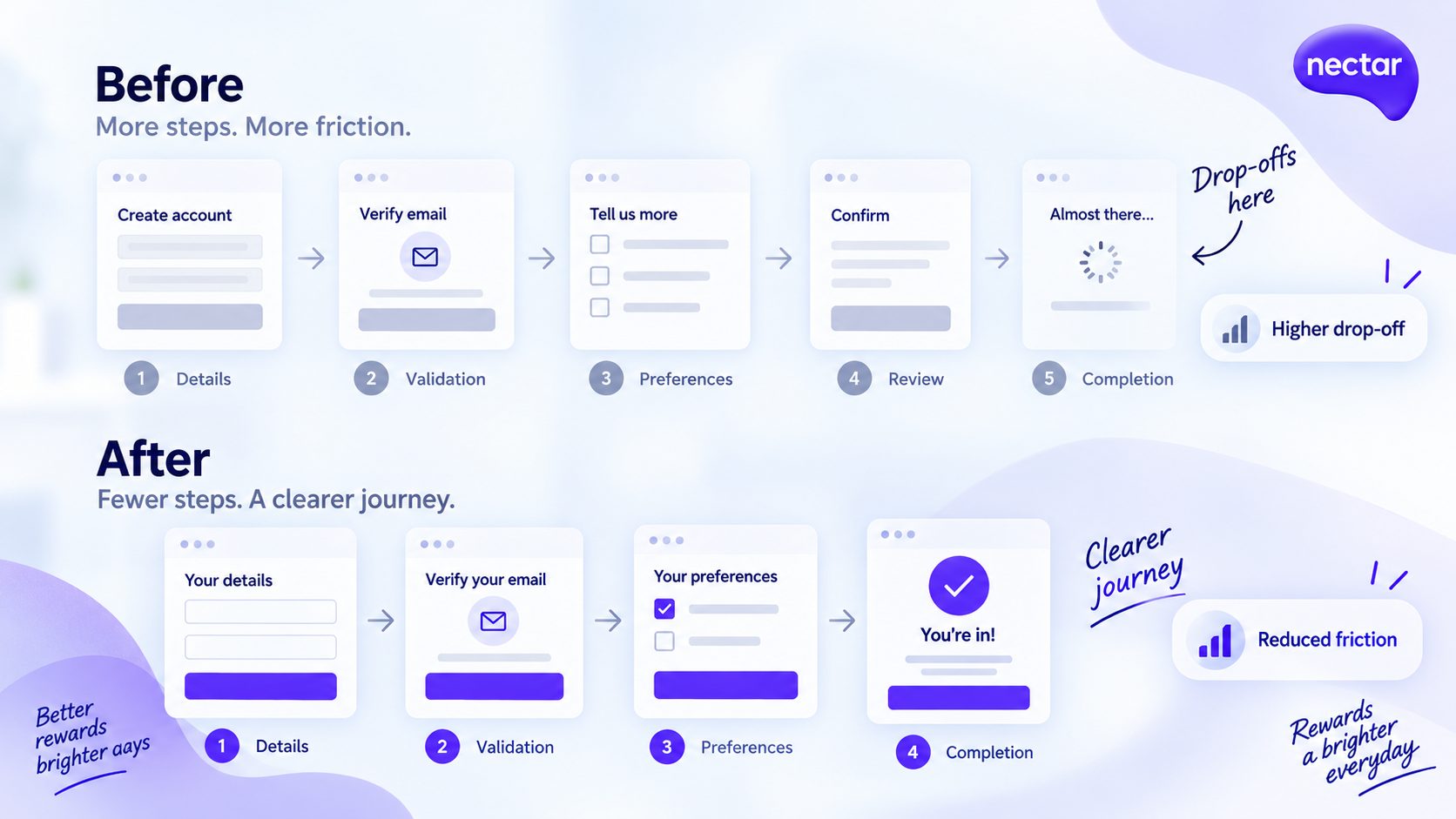
The solution was not a visual redesign. It was a structural rethink of the information architecture: what to ask, when to ask it, and how to reduce the commitment required at each step.
Progressive disclosure
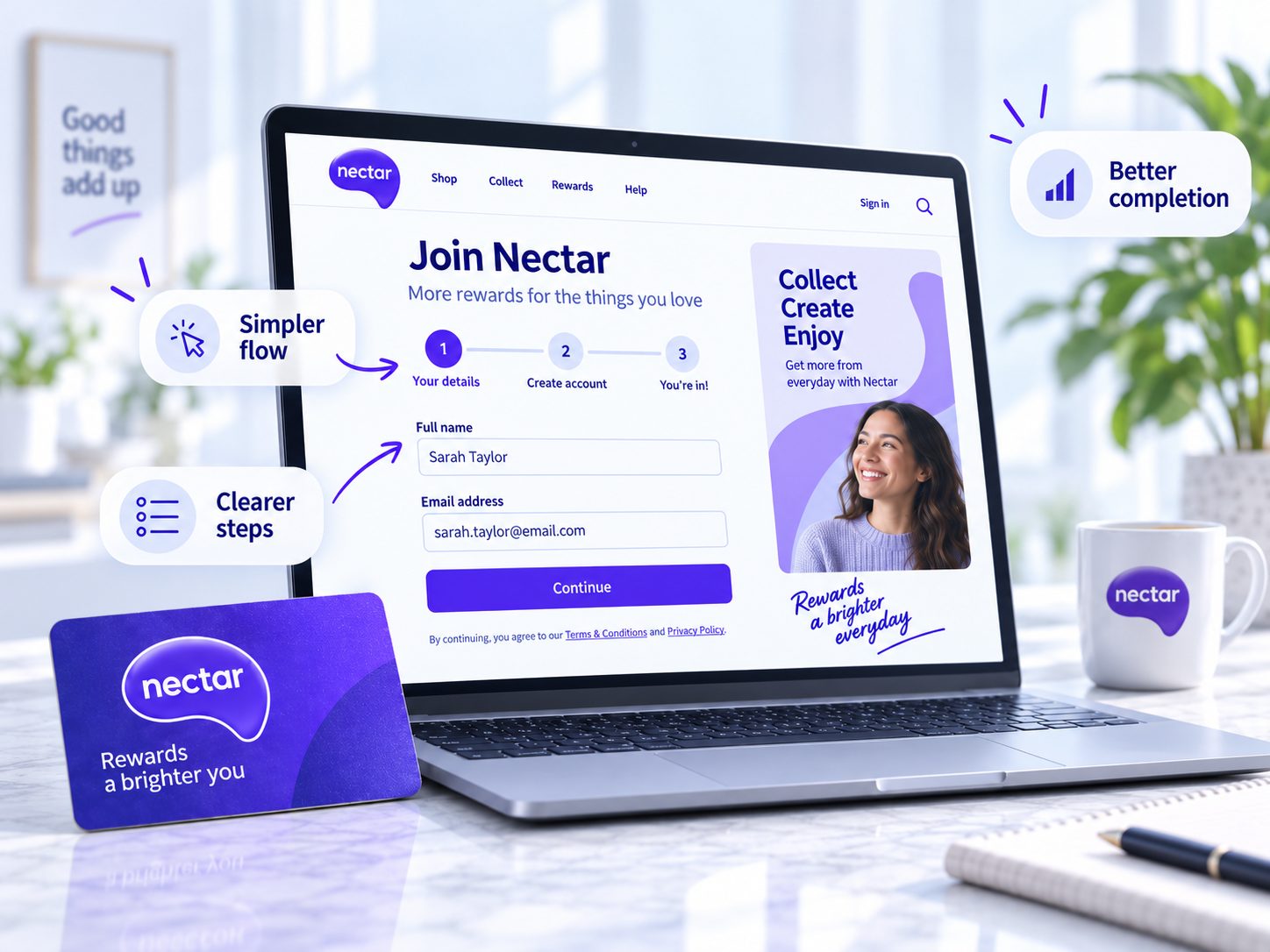
The registration flow was restructured to ask for the minimum information upfront. Additional details were requested only after the initial value exchange had been established and the customer had a reason to continue.
Clear value before commitment
Each step in the flow was reordered so customers understood exactly what they were getting before being asked to provide personal information. The value exchange was corrected.
Helpful error states
Error messages throughout the three flows were rewritten to actually help customers recover from mistakes, rather than simply flag that something had gone wrong and leave them stuck.
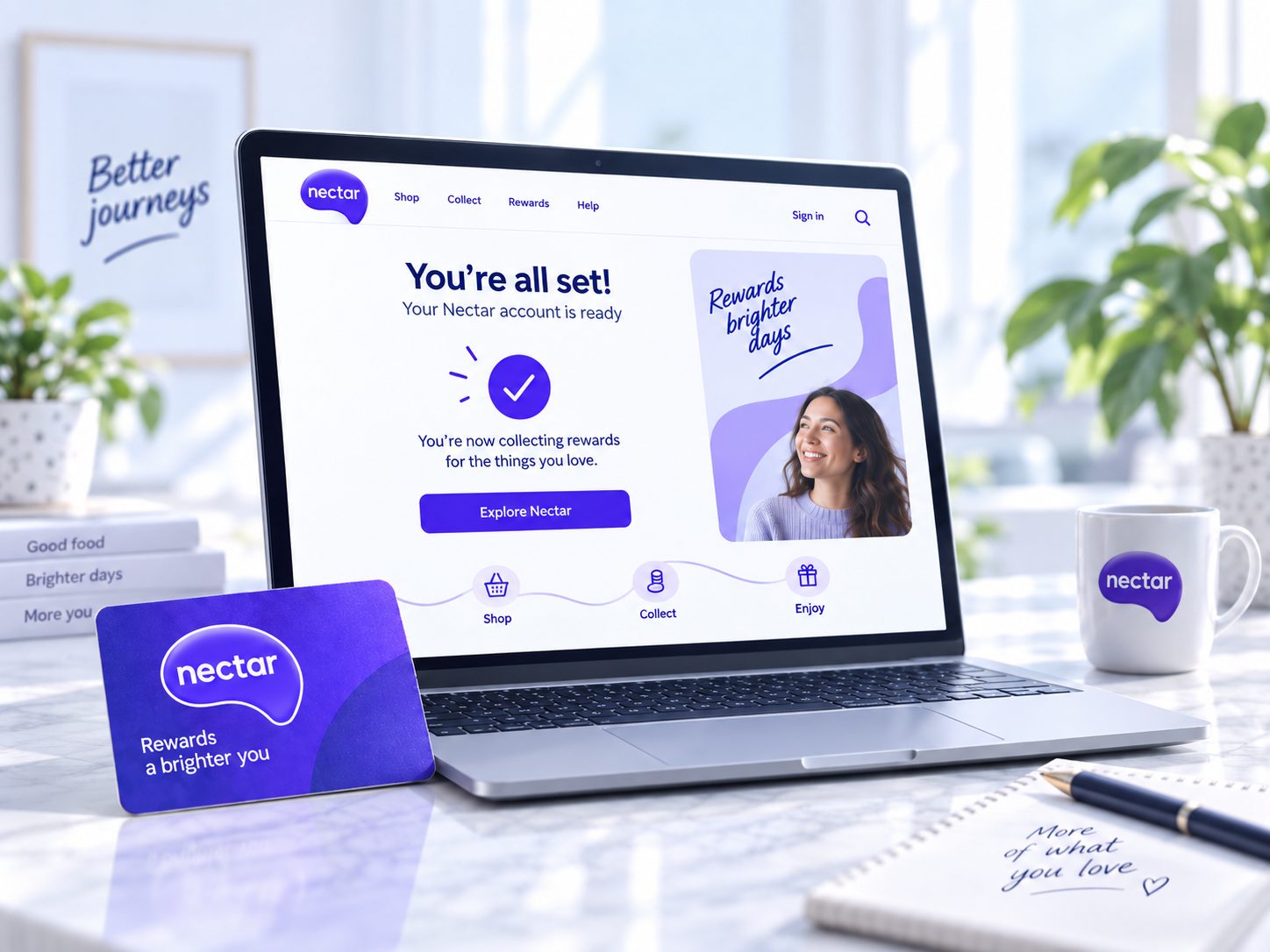
The restructured registration flow. The same information is collected, in a different order, with clearer value shown at each step.
£1.4 million recovered. From one structural fix.
47%
Before
87%
After
£1.4M
Annual revenue recovered
Zero
Social media complaints after launch
Eliminated
Call centre support load from registration issues
1
Root cause identified and fixed
The revenue was always there. It was just leaking through a broken journey that nobody had stopped to walk properly.
This is what happens when you find the constraint instead of optimising around it.
Something similar might be happening in your journey right now.
Book a free Clarity Call and tell me what is happening. I will tell you where I would look first and whether a diagnostic makes sense for your situation.